Updated
|
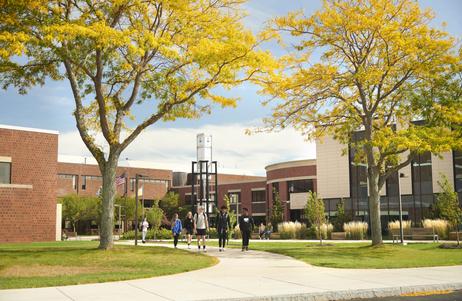
How to Visit a Community College Campus: Parent’s Guide
Discover a step-by-step parent’s checklist for visiting a community college campus in 2025. Learn what to ask, see, and evaluate.

How to Visit a Community College Campus: A Parent’s Checklist

Visiting a community college campus is one of the most important steps families can take when helping a student make an informed decision about higher education. While online research and brochures are helpful, nothing replaces the experience of walking through classrooms, meeting faculty, and getting a sense of the student environment.

For parents, a campus visit provides insight into academic quality, student life, and affordability. This 2025 parent’s checklist will guide you through what to look for, what questions to ask, and how to make the most of your community college campus visit.

Why Visit a Community College Campus?

Community colleges play a vital role in higher education. According to the American Association of Community Colleges, nearly 10 million students are enrolled in community colleges nationwide, many seeking transfer pathways or workforce training. Visiting in person allows families to:

  • Evaluate academic resources, such as labs, libraries, and technology.

  • Understand transfer opportunities to four-year universities.

  • Assess student support services like tutoring, advising, and mental health resources.

  • Gauge the overall campus culture and student engagement.

Parents often focus on affordability, but visiting helps ensure the college is also the right academic and social fit.

The Parent’s Campus Visit Checklist

1. Prepare Before You Go

A

. . .read more

Save $80K: Start at Community College, Then Transfer

Updated
|
Save $80K: Start at Community College, Then Transfer
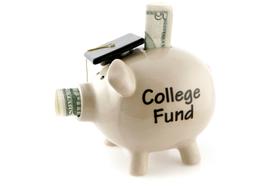
Discover how beginning at a community college can cut as much as $80,000 in education costs before you transfer to a four-year institution.

Save Money: How Starting at Community College Cuts $80K in Costs

Rising college tuition is becoming a defining barrier for many families—but there is a proven path to reduce those costs dramatically. By launching your postsecondary journey at a community college and then transferring to a four-year school, students can often save $50,000 to $80,000 (or more) without sacrificing educational quality.

In this article, we’ll examine how this “2+2” strategy works in 2025, offer concrete cost comparisons, and share tips to maximize savings for students, parents, and educators.

Why the $80K Figure Is Realistic

The basic math

A common estimate suggests that by spending the first two years at a community college and then completing the final two years at a private or public university, students may avoid as much as $80,000 in cumulative costs. CommunityCollegeReview gives detailed examples showing how two years of community college tuition, books, and home-based living can compare with the full four years at an expensive private institution. (Community College Review)

For example, in a widely cited illustration:

  • Community college (2 years): Low tuition + books, perhaps $4,000–$7,000

  • Private university (2 years): Tuition & fees alone might run $30,000+ per year

  • Total avoided cost: Tens of thousands, sometimes surpassing $80,000 when factoring room, board, and loan interest

A recent comparison also shows that a “university-only” four-year

. . .read more

Fastest-Growing Jobs with a Community College Degree

Updated
|
Fastest-Growing Jobs with a Community College Degree
Explore 2025’s fastest-growing jobs you can land with a community college degree. See salaries, programs, and career pathways.

Land One of the Fastest Growing Jobs with a Community College Degree

For decades, community colleges have provided students with affordable access to higher education and job training. In 2025, these institutions will remain one of the most practical pathways to careers in fields projected to expand rapidly over the next decade. With the rising cost of four-year universities and a shifting labor market that increasingly values skills over pedigree, a community college degree can open doors to some of the fastest-growing jobs in America.

Why Community Colleges Matter More in 2025

Community colleges have experienced a resurgence. According to the League for Innovation in the Community College, credentials awarded at two-year schools rose more than 10% between 2023 and 2024, and enrollment growth has outpaced other sectors of higher education. Students are responding to both affordability and alignment with the workforce.

  • Affordability: The average in-state tuition at a public two-year college in 2025 is about $5,099 per year, while out-of-state students pay about $8,784. In some districts, costs are dramatically lower. For example, California’s in-district students average just $1,440 annually (Community College Review). Compared to the $11,260 average for public four-year in-state tuition, the savings are substantial.

  • Return on investment: Students increasingly view college as an investment decision. Certificates and associate degrees aligned with high-growth fields offer a faster, less expensive route to stable employment.

. . .read more

COVID-19 & Higher Education: 2025 Lessons

Updated
|
COVID-19 & Higher Education: 2025 Lessons
How COVID-19 transformed higher education—enrollment, costs, pedagogy, equity, and outlook—in 2025 and beyond.

The Impact of COVID-19 on Higher Education (2025 Update) Introduction

When COVID-19 first swept the globe in early 2020, few foresaw how deeply it would reshape higher education. The disruptions—campus closures, pivot to remote instruction, financial strain, deferred enrollment—sent institutions and students into uncharted territory. As we enter 2025, the aftershocks of the pandemic are still reverberating: some early adaptations have become permanent fixtures, while lingering inequalities and structural stressors remain. This article revisits the original themes through a 2025 lens, updating data, policy responses, and emerging trends, and offering guidance for students, families, and institutions preparing for the future.

Enrollment Volatility and Recovery

The immediate decline—and the rebound. In the early pandemic phase, colleges nationwide saw steep enrollment declines. According to the National Conference of State Legislatures, freshman enrollment dropped by 13.1% in fall 2020, and new international student enrollment fell by 43% in many institutions.NCSL That initial shock set off a cascade of consequences, especially for community colleges and two-year institutions. Over the ensuing years, many institutions struggled to regain lost ground.

By 2024, signs of recovery had strengthened. In fact, 2025 spring enrollment rose 3.2% compared to the prior year—marking one of the strongest year-to-year gains in recent American higher education history. Projection models from NCES suggest modest growth ahead: undergraduate enrollment is forecast to increase 8–9% between 2021 and 2031, with particularly strong gains in part-time and nontraditional students.

. . .read more

The Future of Community College in 2025

Updated
|
The Future of Community College in 2025
Explore how community colleges are evolving post-COVID-19—enrollment, tuition, tech, workforce partnerships, equity, and more in 2025.

What Does the Future of Community College Look Like in 2025?

The COVID-19 pandemic inflicted jolts across American higher education. Community colleges, in particular, felt the shock acutely: enrollment declines, shifts to remote learning, and rising student needs. But as we enter 2025, the sector is adapting. What does the post–COVID future truly look like for community colleges? In this updated analysis, we explore enrollment trends, cost pressures, new program models, technology adaptation, equity and student support, and what it means for students, families, and educators

.

Enrollment Trends and Demographics

One of the most visible impacts of the pandemic was the sustained drop in enrollment at two-year institutions. As of Fall 2024, U.S. undergraduate enrollment was about 19.28 million — down 8.4 percent from its 2010 peak.Community and technical colleges bore a disproportionate share of that decline.

However, 2025 has brought signs of adaptation and modest recovery. According to Six Community College Trends to Watch in 2025, credential awards rose by 10.3 percent in spring 2024 compared with the previous year, signaling renewed student interest in shorter, more targeted credentials.Many community colleges now report stabilized or slowly increasing headcounts in certificate and workforce programs, even if traditional degree enrollment remains muted.

Key demographic shifts include:

  • YOUnger learners, especially Gen Z, are increasingly adopting micro-credentials and stackable certificates rather than full two-year degrees. league.org

  • Adult learners and re-skilling populations, who

. . .read more

Recent Articles

Test Article, Image and Content
Test Test Test Test Test Test Test Test Test Test Test Test Test Test Test Test Test Test Test Test Test Test Test Test Test Test Test Test Test Test Test Test Test Test Test Test Test Test Test Test Test Test Test Test Test Test Test Test Test Test Test Test Test Test Test Test Test Test Test Test Test Test Test Test Test Test Test Test Test Test Test Test Test Test Test Test Test Test Test Test Test Test Test Test Test Test Test Test Test Test Test Test Test Test Test Test Test Test Test Test Test Test Test Test Test Test Test Test Test Test Test Test Test Test Test Test Test Test Test Test Test Test Test Test Test Test Test Test Test Test Test Test Test Test Test Test Test Test Test Test Test Test Test Test Test Test Test Test Test Test Test Test Test Test Test Test Test Test Test Test Test Test Test Test Test Test Test Test Test Test Test Test Test Test Test Test Test Test Test Test Test Test Test Test
Faith Formation Integrated Across Subject Areas
Explore faith formation integrated across subject areas and its impact on curriculum, student outcomes, and community colleges.
Parish-Based Governance Models in Catholic Schools
Explore parish-based governance models in Catholic schools and their impact on leadership, funding, and community colleges.